
Renvyle in Connemara: A Practical Guide to Staying on the Peninsula
Renvyle is a strong choice for anyone planning a stay in Connemara who wants direct access to coastline and mountain landscapes, without the crowds. Positioned on a peninsula in the north-west of the region, it offers wide views and quiet roads with open views shaped by the Atlantic. This part of Connemara feels settled and lived-in, which makes it well suited to longer stays.
The appeal of Renvyle Ireland lies in how straightforward it is. Beaches and walking routes are close by, which makes day trips easy to plan without spending half the holiday in the car. It works equally well for active travellers and for people who want to slow things down and stay local.
Where Renvyle Is Located in Galway and Why the Setting Matters
Renvyle (from the Irish name ‘Rinn Mhaoile’, meaning ‘bald peninsula’) is in County Galway, on the northern edge of Connemara, between Tully Cross and the Atlantic Ocean. Inland, the land rises quickly towards the Twelve Bens, while the coastline breaks into beaches and small inlets. The geography shapes everything here, from the views to the pace of daily life.
Clifden is around 25 minutes away by car, making it the nearest main service town for shops, cafés, restaurants, and supplies. The route passes through Letterfrack and close to Kylemore Abbey, both easy stops if you’re exploring the area.
To the north, the road network opens towards Killary Harbour, while inland routes connect to walking areas and mountain trails. Staying in Renvyle keeps these options within reach without putting you in the middle of heavy traffic or tour routes.
Visiting Renvyle Castle and Understanding Its Place in the Area
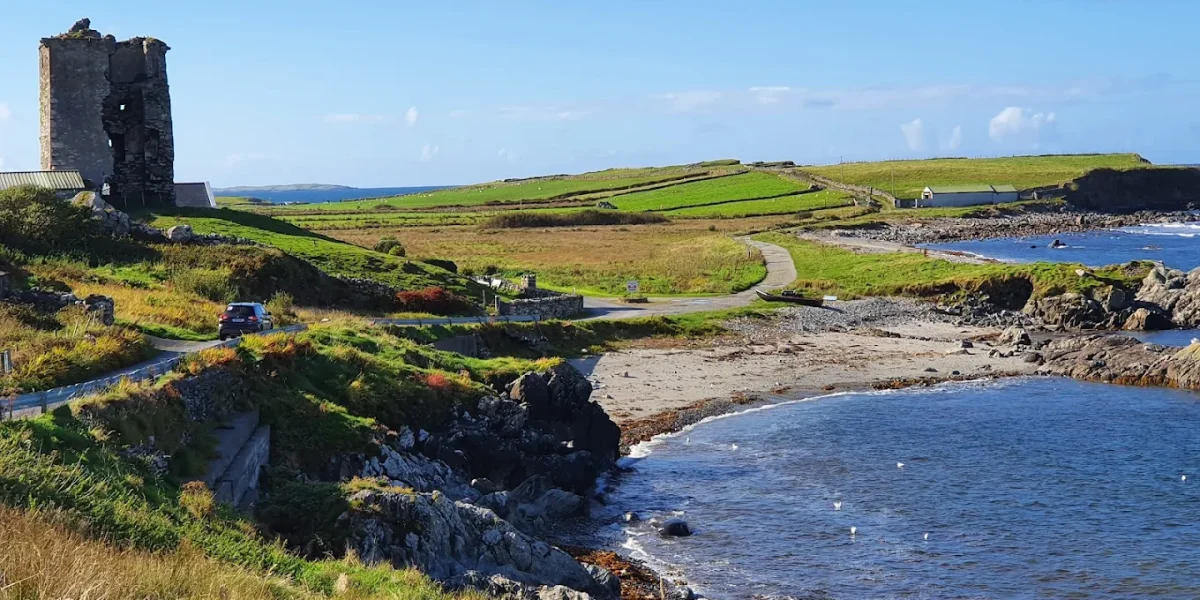
Renvyle Castle sits on a stretch of coastline just west of Renvyle and is often seen from the road rather than visited directly. It’s important to note the spelling here. This is Renvyle Castle, not Renville Castle which is a separate site south of Galway City. The Renvyle ruins are firmly part of north Connemara and feel it.
The castle itself is on private land and cannot be accessed, which is worth knowing in advance. You view it from nearby pull-ins, surrounding fields, or from the shore below. Despite that, it remains one of the more striking ruins in the area, largely because of its position. Set against the Atlantic, with open views across the water, it has a presence that doesn’t rely on interpretation boards or formal access.
Renvyle Castle is not a stop where you spend hours exploring, but it is one of those places that stays with you. You pass it, you stop briefly, and it quietly reinforces why this stretch of coastline feels so rooted and unchanged.
Spending Time at Renvyle Beach and the Surrounding Coastline
Renvyle Beach sits on the northern side of the peninsula and is widely regarded as the best of the sandy bays in the area. It’s a long, clean stretch of soft sand with shallow water, which makes it popular for swimming, paddling and relaxed beach walks. The setting faces north towards Mayo, with open views across the water to islands and distant hills, helping to keep conditions calmer than you might expect on the Atlantic coast.
The beach is particularly well suited to families thanks to the gentle slope of the shoreline and the lack of sudden drop-offs. Even so, it remains unspoilt. There are no toilets, cafés, lifeguards or marked facilities, and that’s very much part of its appeal. Parking is limited and can be tight in summer, but that naturally keeps numbers down and preserves the quiet feel.
Renvyle Beach works well after inland walks or hikes, including routes around Diamond Hill, when a swim or slow walk along the sand finishes the day properly.
Exploring Tully Lough and the Quieter Inland Landscape
Just inland from the coast, Tully Lough offers a quieter alternative to the exposed shoreline. The lake sits among farmland and small roads, making it a useful spot for short walks or slower exploration away from the Atlantic. It’s an understated part of Renvyle, but not an insignificant one.
In 1986, an early medieval altar or processional cross, known as the Tully Lough Cross, was recovered from the lake. Dating to the eighth or ninth century, the cross was constructed with a wooden core and bronze decoration influenced by earlier Celtic styles. Following conservation and reconstruction, it was acquired by the National Museum of Ireland, where it is now on permanent display.
While the cross itself is no longer here, its discovery adds historical context to an otherwise quiet inland landscape, highlighting how long this landscape has been lived in.
Where to Stay in Renvyle for Comfort and Flexibility
Accommodation around Renvyle tends to favour space and privacy over volume. Holiday homes, cottages, and coastal houses suit visitors who plan to stay several nights and want room to settle in properly. This style of accommodation works particularly well for families, couples, and small groups travelling together.
Staying in Renvyle also makes it easy to explore other parts of Connemara while keeping a consistent base. You can head south towards Ballyconneely, loop through Clifden and the Sky Road, or plan inland walks such as Diamond Hill without changing accommodation mid-trip. It’s a practical setup that suits longer visits.
Why Renvyle Is Worth Visiting and Where to Base Yourself
Renvyle suits travellers who want scenery and breathing room without the pressure of a busy destination. The area offers a strong mix of coastline, inland walking, local history, and easy links to the rest of Connemara, all while remaining calm and manageable.
If you’re planning a stay, Connemara Holiday Lettings offers a range of self-catering accommodation in Renvyle, including coastal houses, lake-side cottages, and larger properties suitable for families or groups. Booking locally gives you space and flexibility, with a base that suits how Renvyle is best experienced.
Browse Renvyle holiday homes with Connemara Holiday Lettings